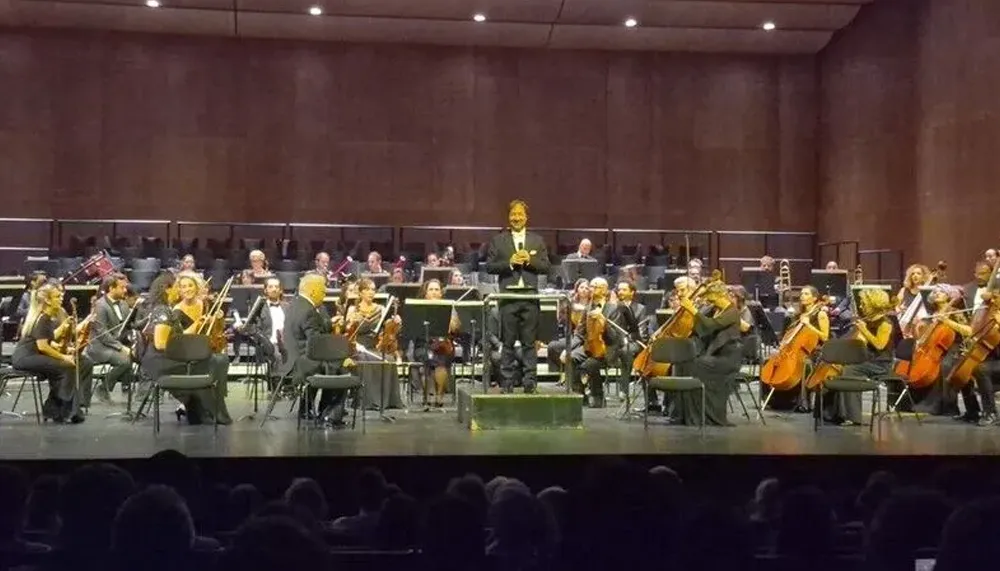
Noting that next year is the 200th anniversary of Beethoven's death, Chief İbrahim Yazıcı reminded that the composer's 250th birthday could not be celebrated properly due to the epidemic period. Stating that they aim to make up for the past by opening the new season with this giant work, Yazıcı also touched upon the "artificial intelligence and art" axis, one of the most heated debates of our age, in his speech.
Emphasizing that Beethoven composed this masterpiece between 1822 and 1824, in a dark period when he completely lost his hearing, Yazıcı questioned the creativity limits of artificial intelligence. Yazıcı's words, which opened the horizon to the ongoing discussions about the unfinished 10th Symphony, pitted the copying ability of algorithms against human genius.
The master conductor said, "If Beethoven had left the 9th Symphony unfinished and the continuation of the work was created by uploading the first 8 symphonies to artificial intelligence, could he consider using a choir in the final section? I think not. Because this is not only acting from existing data, but also revealing a new and unique creativity." He argued that human inspiration cannot be copied by machines.
The "Turkish March" and the Triumph of Goodness in the Fourth Chapter
Sharing the structural details of Beethoven's giant work with the audience, Yazıcı stated that the fourth movement of the symphony tells the "struggle of good against evil" in an epic language. It was noted that in this great musical battle, percussion instruments came to the fore dramatically.
This magnificent section, also known as the "Turkish March" motif in the world of classical music, also contains a historical reference with its rhythmic structure. It was conveyed to music lovers that the arrival of the Ottoman army, considered one of the most invincible powers of the period, from afar with the rhythms of the mehteran, was depicted by Beethoven with the unique use of percussion instruments.
Huge Cast and Unforgettable Performance on Stage
This unforgettable night witnessed a magnificent musical harmony on stage. While the İDOB Orchestra was conducted by master conductor İbrahim Yazıcı, the İDOB Choir, which added splendor to the night, was conducted by Paolo Villa. The performance of this giant team, which gave classical music lovers a perfect acoustic experience, received a standing ovation.
Türkiye's leading opera singers took the stage in those unique parts of the symphony that rose with vocals. The outstanding performance of soprano Dilruba Bilgi, mezzo-soprano Aylin Ateş, tenor Berk Dalkılıç and bass Burak Bilgili as soloists enabled the 2026-2027 art season to start with a memorable opening.