
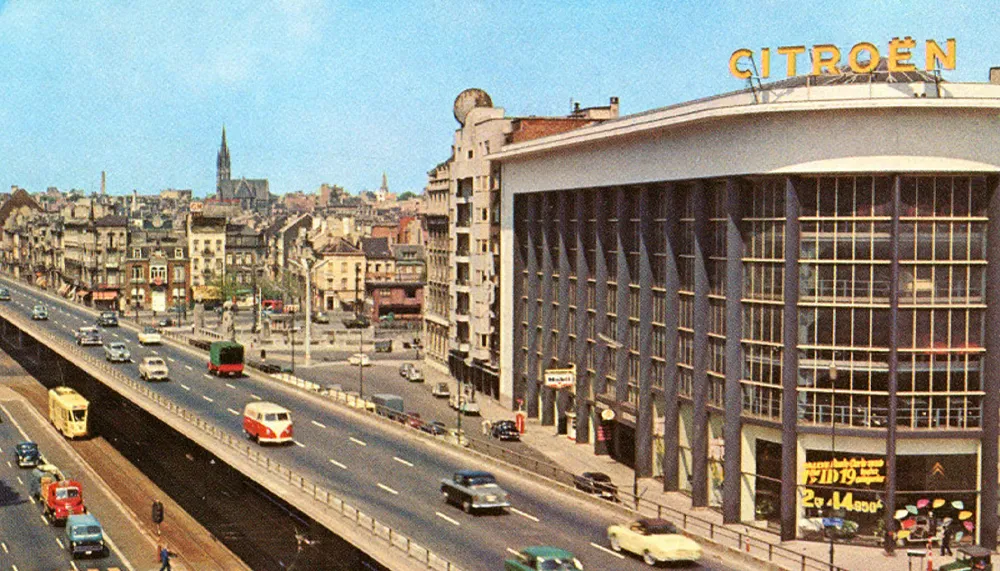
Brussels, the capital of Belgium, is focused on the opening of the Canal project on November 28, where a former Citroën garage has been transformed into a huge contemporary art and living space of 40 thousand square meters. This building, which includes extraordinary details including its own oven and children's playgrounds, was brought to life with the vision of becoming the city's first major modern and contemporary art museum.
However, there is a serious management rift at the top of the project, which has been at the center of criticism with its budget of 230 million euros since 2013. Canal Museum General Manager Yves Goldstein announced that he will step down on November 30, just after the opening weekend, due to "differences of opinion" regarding the future of the institution.
In the official statement made by the Brussels Capital Region administration, it was confirmed that there were differences of opinion with Goldstein regarding the future of the museum. New interviews are planned to be held this month for the leadership position of the museum, which will rent works of art from the Center Pompidou in Paris for the first five years and will pay 2 million euros annually for this.
Decreasing Public Funds and the Reaction of Local Artists
The financial sustainability of the museum is one of the hottest topics of discussion in regional politics. The Brussels regional government, which stated that it provided an additional loan of 60 million euros to the Canal Foundation this year for the construction project, announced that the museum's public operating grant, which was 28 million euros in 2026, will decrease to 10 million euros annually until 2029 and that the institution will have to turn to private donors starting from 2028.
Critics such as Brussels regional council member and former media minister Benjamin Dalle describe this structure as a "top-down political project" disconnected from local artists. Dalle stated that those who want to see the Pompidou collection can go to Paris in a short time by Eurostar, and questions why partnerships are not established with local institutions such as SMAK in Ghent or the Museum of Contemporary Art in Antwerp.
The Federation of Visual Arts (Fédération des arts plastiques) also calls for the immediate termination of the relationship with Center Pompidou. Industry representatives; It raises serious concerns about the space allocated to Belgian artists in the programming, the purchasing policies and the accessibility of the museum for local people.
Public Space Emphasis and Future Vision
Despite all these controversies, Canal's Artistic Director Kasia Redzisz remains optimistic about the museum's future. Arguing that the museum, established in one of the lowest income regions of Belgium, should appeal to the local public as much as it contributes to global discussions, Redzisz states that the 20 thousand square meter area will be a public space completely open to the public and free of charge.
Approximately 15 percent of the museum's collection will consist of works from the Canal's own inventory or borrowed from institutions in Belgium. In addition to Belgium-based artists such as Ann Veronica Janssens, Gabriel Kuri and Sammy Baloji, names such as Joëlle Tuerlinckx will be featured in the museum with special commission works inspired by the building's own construction process.
Believing that the opening will eliminate existing doubts, the art management aims to attract 550 thousand visitors annually by 2030. With its children's playgrounds, meeting spaces and social areas where young people can study, designed by the Turner Prize-winning Assemble collective, the Canal promises to be not just a museum but a living urban center.